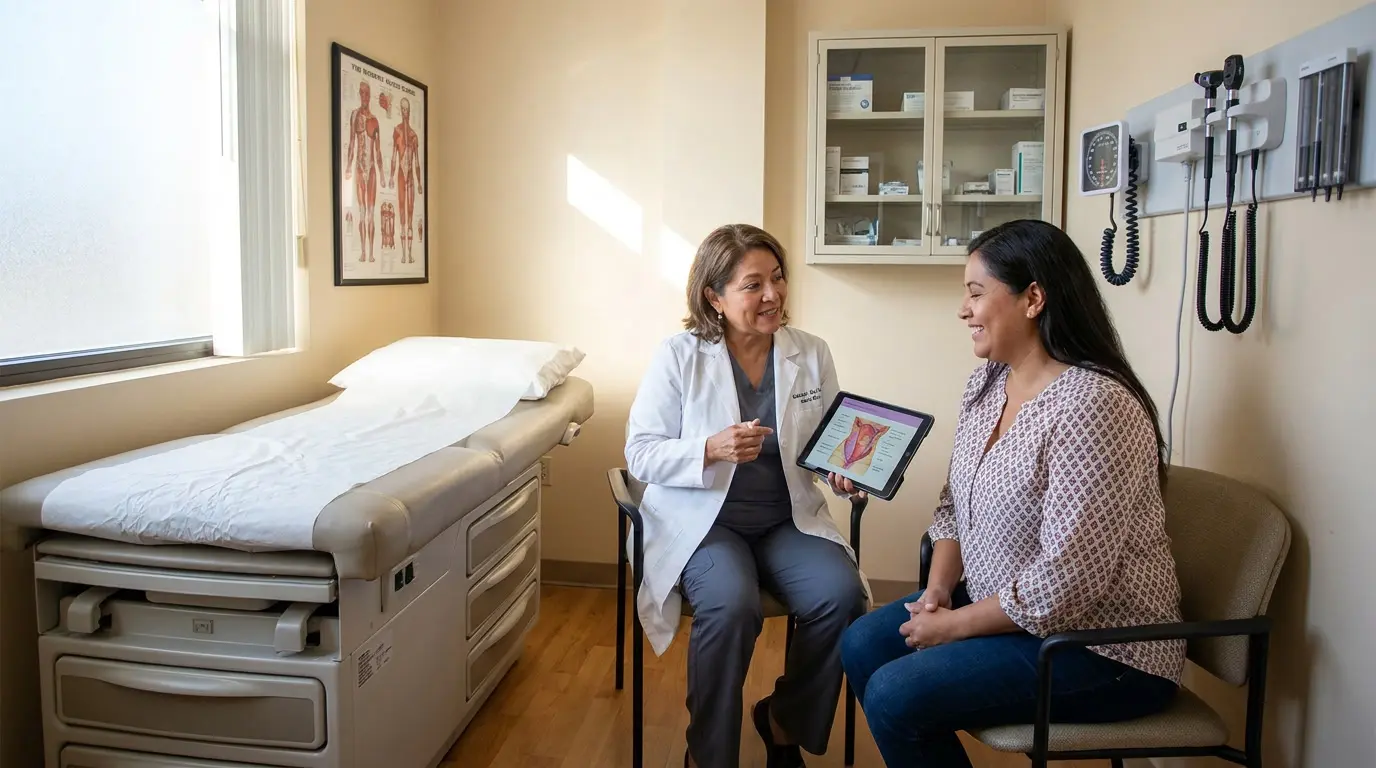
Yesenia kept the little card she was given when her implant went in and tucked it into the kitchen drawer, somewhere between the electric bills. Looking for something else not long ago, she found it and realized the date written on it had already come and gone. Her sister had hers placed more recently, but she just got married and wants a baby next year. Same question, different reasons: when is it time to take it out, and what does it feel like? Here we walk through it step by step, so you show up to the visit knowing what to expect.
What the implant is and why it does not stay forever
The birth control implant is a small, flexible rod, roughly the size of a matchstick, that sits under the skin on the inner side of the upper arm. It slowly releases a hormone that prevents pregnancy, and while it is within its time of use it ranks among the most effective methods there are, because it does not depend on you remembering anything.
It does not work indefinitely, though. Each implant has a time of use set by the manufacturer, and over the years the amount of hormone it gives off drops. So the idea is not simply to "leave it in as long as it doesn't bother me": once the date passes, the protection is no longer reliable.
Three common reasons to have it removed
1. The date on your card has arrived
The easiest way to know when yours is due is to check the card or paper you got when it was placed. If you cannot find it, try to recall the month and year it went in, or ask the place that put it in for the date. With that information, the Clínica Hispana Mangum medical team can help you work out whether it is time to replace it or simply take it out.
A practical tip: once you know the date, put it in your phone calendar with a reminder a couple of months ahead. That gives you time to think calmly about which method you want afterward.
2. You want to get pregnant
There is no need to wait until the date on the card. If you decide you want a pregnancy, the implant can be removed at any time. As our implant removal page explains, fertility comes back soon after the rod is out, so many women can start trying for a baby shortly afterward.
If that is your plan, ask during a gynecology visit how to get ready before pregnancy: whether your Pap test is due, how to handle any chronic conditions, and starting to eat well early on.
3. It causes problems that do not get better
Some women adjust to the implant easily and others do not. One of the most talked-about side effects is irregular bleeding: spotting between periods, bleeding that lasts longer, or bleeding with no clear pattern. If that does not settle over time and you no longer want to put up with it, that is a perfectly good reason to take it out. It is also worth coming in if the spot where the implant sits hurts, if you feel it has shifted, or if you can no longer find it when you touch your arm.
Before you decide, talk it over with the medical team: sometimes something else is behind the bleeding and deserves a look, and sometimes switching methods is simply the best way forward.
What removal is like, step by step
Taking out the implant is an outpatient procedure: you come in, it is done in the exam room and you head home right after, with no hospital involved. It is done under local anesthesia by trained staff. Here is how the service page lays it out:
- Finding it. The medical team feels along your arm to pinpoint the rod under the skin.
- Numbing. A small patch of skin is numbed. That little pinch is usually the only thing you notice.
- Taking it out. The whole rod comes out through a cut just a few millimeters long.
- Closing. A small adhesive strip and a pressure bandage go on.
The whole thing usually takes a few minutes. During removal it is normal to feel some pressure or a slight tug, but not pain, because the area is already numb.
If the implant cannot be felt
Once in a while the rod sits deeper or has moved a little and can no longer be felt with the fingers. In that case nobody tries to dig for it blindly: it first has to be located with an imaging study. If this happens to you, the medical team explains what the next step is to find it before removal.
Care after removal
Once it is out, aftercare is simple, and we go over it with you before you leave:
- Pressure bandage: keep it on for as long as you are told when you leave; it helps keep a big bruise from forming.
- Small strip: it stays over the cut for a few days, until the skin closes.
- What to expect: a small bruise, some tenderness when you touch the area or carry grocery bags with that arm.
- Keep the area clean and dry, and avoid scratching it or peeling the strip off early.
Come back if the redness around the cut keeps spreading, if there is pus, or if you run a fever. Those are signs the wound may be getting infected and needs to be checked.
Which method comes after the implant
This is the part many people forget. When the rod comes out, its protection ends right then. If you are not trying to get pregnant, the service page recommends starting another method without leaving a gap, so you are not left unprotected.
Our birth control page lists what the clinic offers:
- Birth control pills, taken daily at a set time.
- The birth control shot, given once every three months.
- Guidance on long-acting methods, such as a new implant or an IUD.
If you liked having a method you did not have to think about every day and you want a new implant, we guide you on where to have it placed. If you would rather take pills, whatever the medical team prescribes you can pick up right there at the clinic's pharmacy, before you head home with your arm bandaged.
To help you choose, the team checks your blood pressure and asks about smoking, migraines with aura and any past blood clots, since certain pills are a poor fit in those situations.
Keep in mind that neither the implant, the pills nor the shot protect against infections; condoms are what do that.
What if the implant date passed months ago?
If the implant had already expired and you had sex without another method, you may not have been protected. In that case, and especially if your period is late, it makes sense to take a pregnancy test before starting the next method. That way the decision is made with real information.
When it cannot wait: ER or 911
Do not wait for an appointment; get emergency care if you have:
- Bleeding so heavy it soaks pad after pad and comes with dizziness or fainting.
- Very strong pelvic pain that comes on suddenly.
- A possible positive pregnancy test along with severe pain on one side or bleeding.
- A spiking fever that shows up alongside pelvic pain below the navel.
Before you come in to have the implant removed
So the visit goes smoothly and you leave with your next method decided, bring:
- The implant card, or the approximate date it was placed.
- The date of your last period.
- An idea of what you want next: pregnancy, pills, the shot or another implant.
- A short-sleeved top, or one that is easy to roll up to the shoulder.
If you live in northwest Houston, in 77092 or nearby neighborhoods like Lazybrook and Timbergrove, the Clínica Hispana Mangum medical team will see you to check your arm, take out the rod and leave you with a clear plan for what comes next for your body and your family.